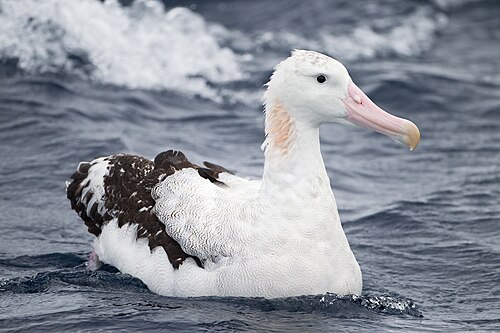
On Marion Island, located in the Southern Indian Ocean off the coast of South Africa, introduced house mice are endangering the long-term survival of seabirds and other native species. In response, the Mouse-Free Marion Project proposes an ambitious plan to distribute rodenticide bait from underslung bait buckets on helicopters in overlapping swathes across the entire 30,000-hectare island. Their goal is … Read More
Support for Point Blue Staff on Farallon Islands – 2025 & 2026
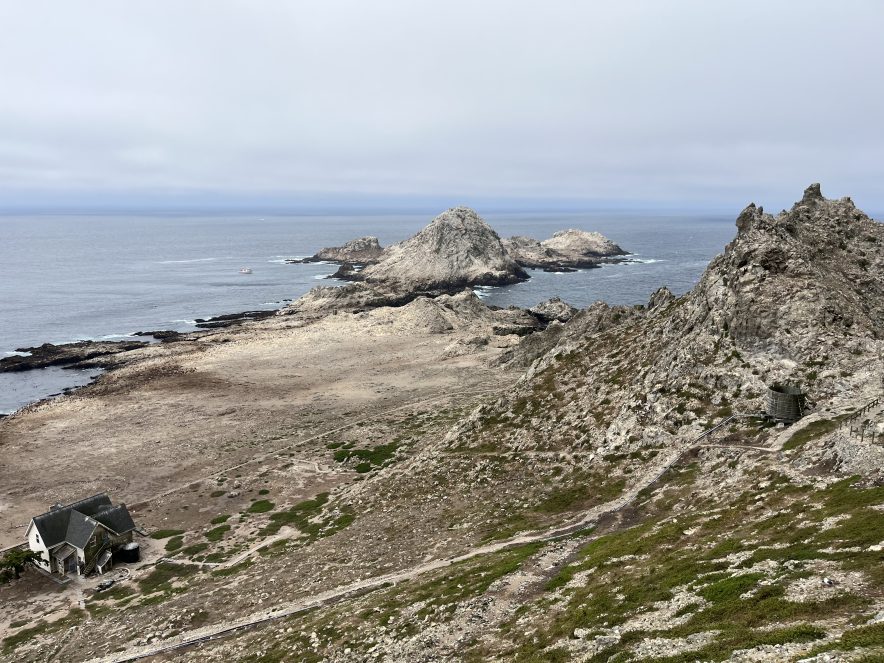
Biologists from Point Blue Conservation Science have been monitoring the population size, reproductive success, and diet of seabirds in the Farallon Islands for more than 50 years. Long-term datasets produced by this program are essential to biologists’ understanding of seabird population health in the past, present, and future. Due to budget cuts across the U.S. Fish and Wildlife Service in … Read More
Tracking Ashy Storm Petrels in the Channel Islands – 2024

As wind energy companies assess the waters of California for possible future sites for deep-water wind energy infrastructure, understanding the potential impacts on marine seabirds is important. Ashy storm petrels, which breed in the Farallones and northern Channel Islands, and Leach’s storm petrels, which breed from the Channel Islands south into Baja California, may be particularly vulnerable to collisions or … Read More
Survey for Southern River Terrapin in Sumatra – 2019

In 2019, the Farallon Islands Foundation provided a grant to the Turtle Survival Alliance (TSA) to support a search for the Southern River Terrapin (Batagur affinis) in Sumatra. Once a common river and estuarine turtle of Southeast Asia, the Southern River Terrapin is now one of the world’s top 25 most endangered turtles. In cooperation with the Satucita Foundation, a … Read More
Assessing hurricane impacts to Puerto Rican Birds – 2018

During September 2017, the island of Puerto Rico was impacted by two major hurricanes — Irma (September 7) and Maria (September 20). These two storms, especially Maria, devastated infrastructure and natural areas throughout the island. FIF’s 2018 grant to the Sociedad Ornitológica Puertorriqueña, Inc. (SOPI) and Vermont Center for Ecostudies (VCE) helped to fund an island-wide bird census to assess the … Read More
Debris monitoring in the Prince William Sound – 2017

In the northern Gulf of Alaska, plastic debris accumulates along the coastline, killing marine mammals through entanglement and ingestion, and damaging marine environments through the numerous chemicals compounds that leach from the plastic. Since 2006, the Gulf of Alaska Keeper (GoAK) has worked to combat this problem through marine debris cleanups and public education efforts. In 2007, they began an … Read More
Creating Biodiversity Reserves in the Solomon Islands – 2017

The Solomon Islands are a chain of hundreds of forested islands located east of Papua New Guinea in the South Pacific. On the islands of Teanu and Tinakula, rainforests provide habitat for a number of endemic and endangered species. Tinakula, an active volcano, is home to the Santa Cruz Ground Dove (Endangered), the Temotu Flying Fox (Endangered), Palm Lorikeet, Rosewood, … Read More
Preserving Forest Habitat in Sumatra – 2016

On the island of Sumatra, forests are being logged for pulp and paper production, and illegal oil palm plantations. A large surviving block of forest in the vicinity of Bukit Tigapuluh National Park in central Sumatra provides home to a wealth of wildlife, including Sumatran Elephants, Sumatran Orangutans, 30 of the remaining 400 Sumatran Tigers, and many other threatened species … Read More
Norway Brown Rat Control on South Georgia Island – 2012, 2013 and 2014

South Georgia Island is a remote and inhospitable island in the southern Atlantic Ocean, located less than 700 miles north of the Antarctic mainland. Large, at nearly 1,500 square miles, the island is mountainous and heavily glaciated. The island’s unique position between the cold Antarctic waters to the south and the warmer waters to the north together contribute to the … Read More
Invasive Rat Control on Henderson Island – 2011, 2014

Henderson is the largest island in the Pitcairn group in the South Pacific Ocean, (latitude 24.22 S, longitude 128.19 W). It is home to breeding Henderson Petrels as well as other endemic bird species. Pacific Rats (Rattus exulans) had been killing more than 25,000 petrel chicks a year, threatening the continuing existence of this rare seabird. Fully 99 of all … Read More
- Page 1 of 2
- 1
- 2